Stitching the Evidence Together

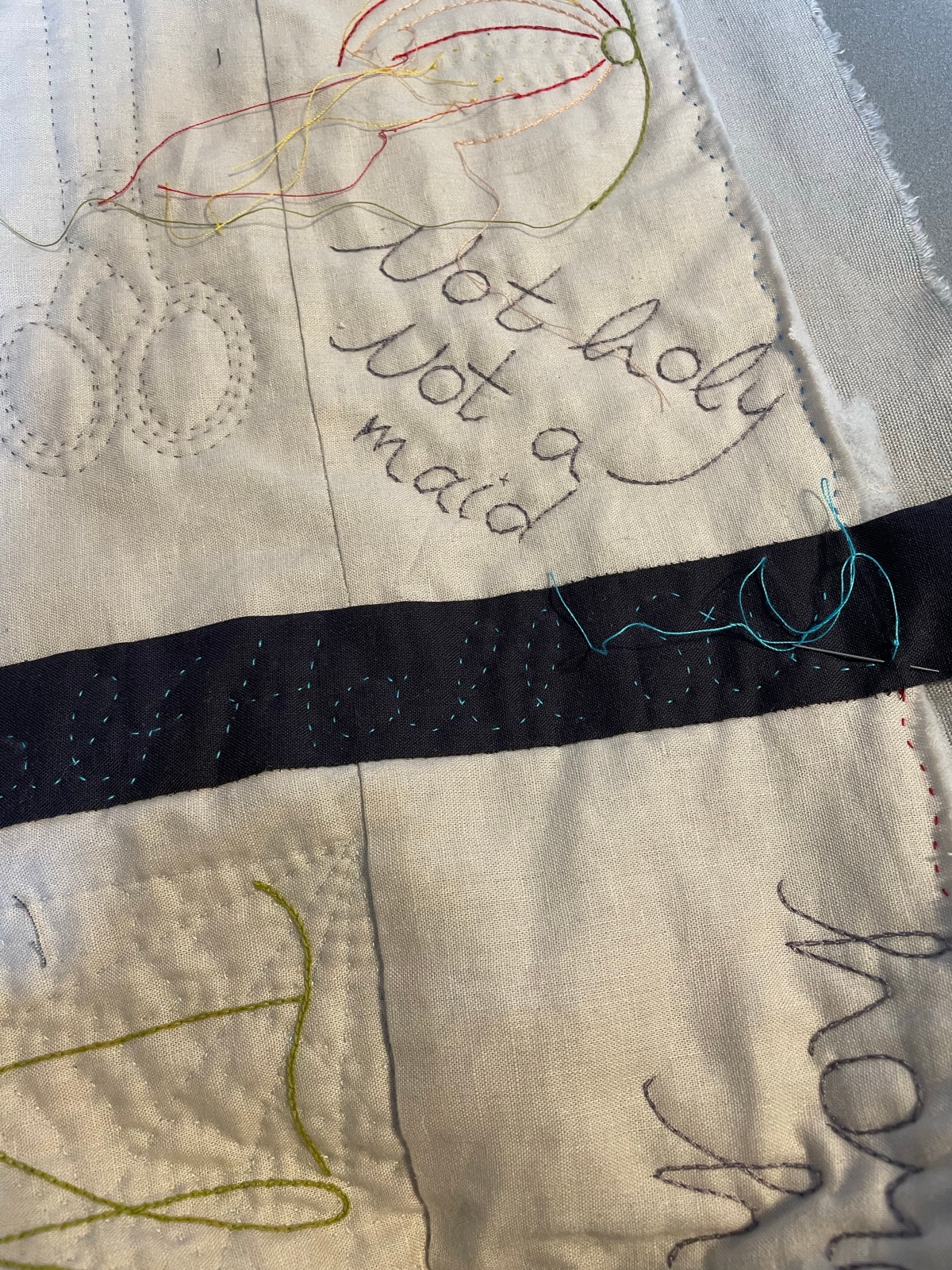
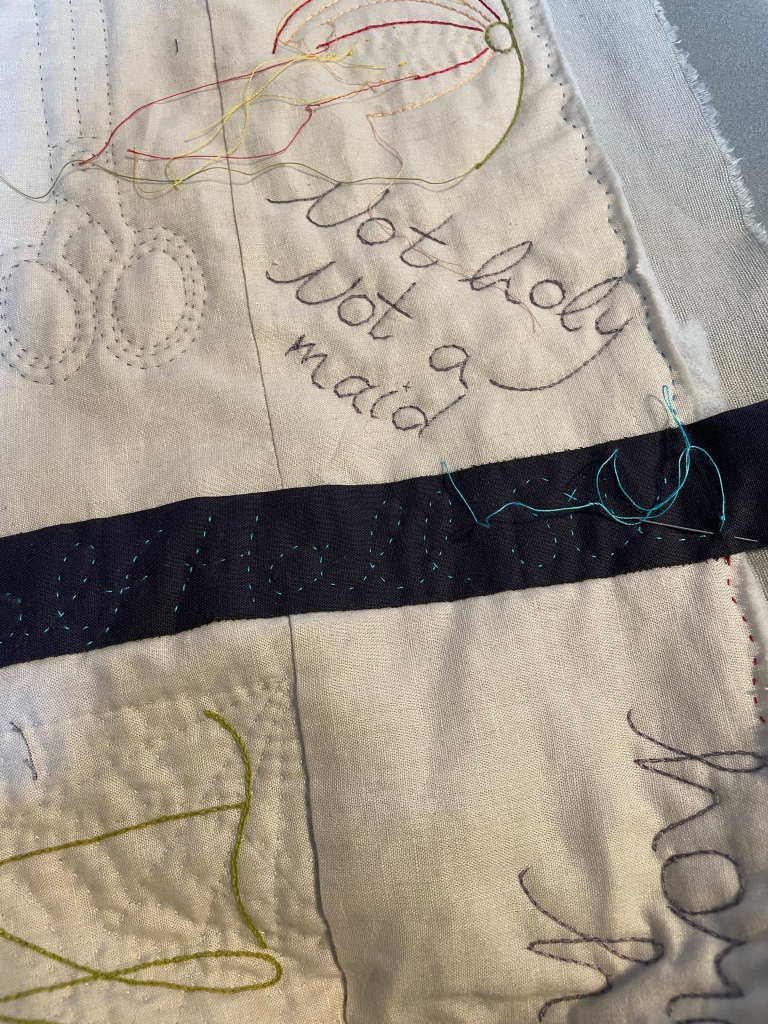
A quilted piece with the words “Not holy Not a maid” visible. Some turqouise stitching on black fabric shows words that are not entirely clear but read “Wolf Hall Six”. A needle and thread at the end of the word “Six” is pushed half way into the fabric.
The last stitch in the first Wolf Hall quilt

Twenty five months ago today – on 19 August 2021 – I put the last stitch into the First Wolf Hall Quilt. I’d spent a very uncomfortable few hours joining all the sections together to make forty six feet of quilting, and had struggled while wrestling the writing and coiling length into one long roll.

More recently, I have been regularly visiting the National Archives at Kew, just outside London, looking at Sixteenth Century documents relating to Thomas Cromwell. Such documents – especially those that take the form of rolls – are often stitched together. This gives me a feeling of continuity – these old parchments and my quilting are hand-sewn together with needle and thread, joining narratives and the historical record.
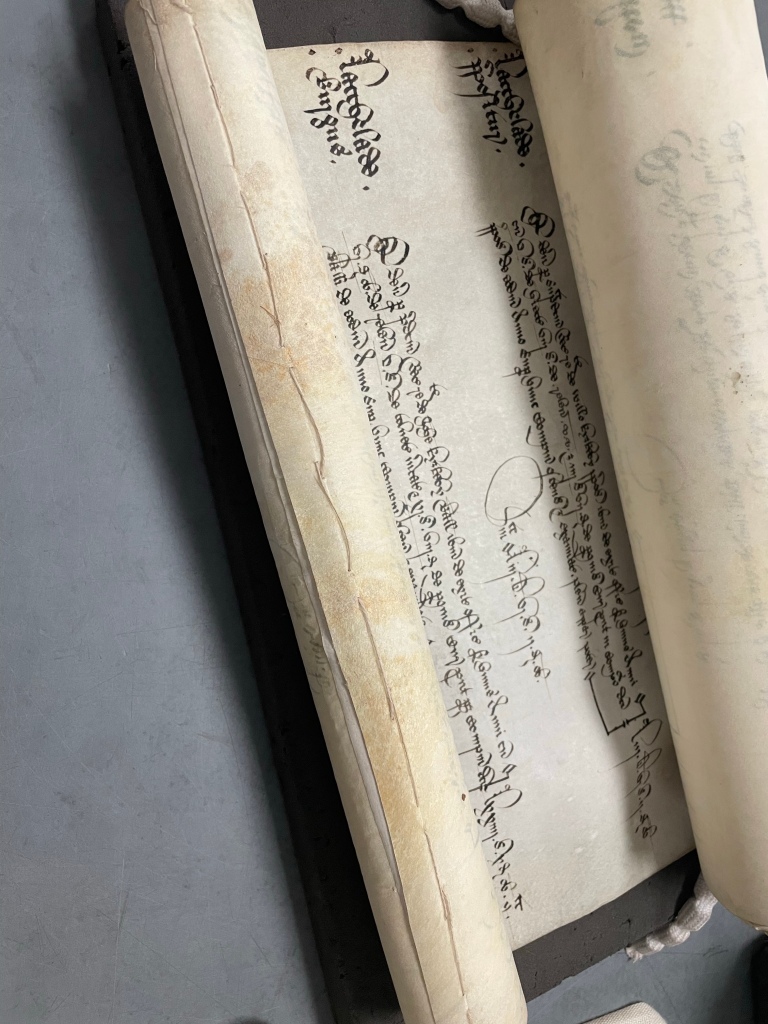
A rolled document with long stitches showing where different pages are joined together.

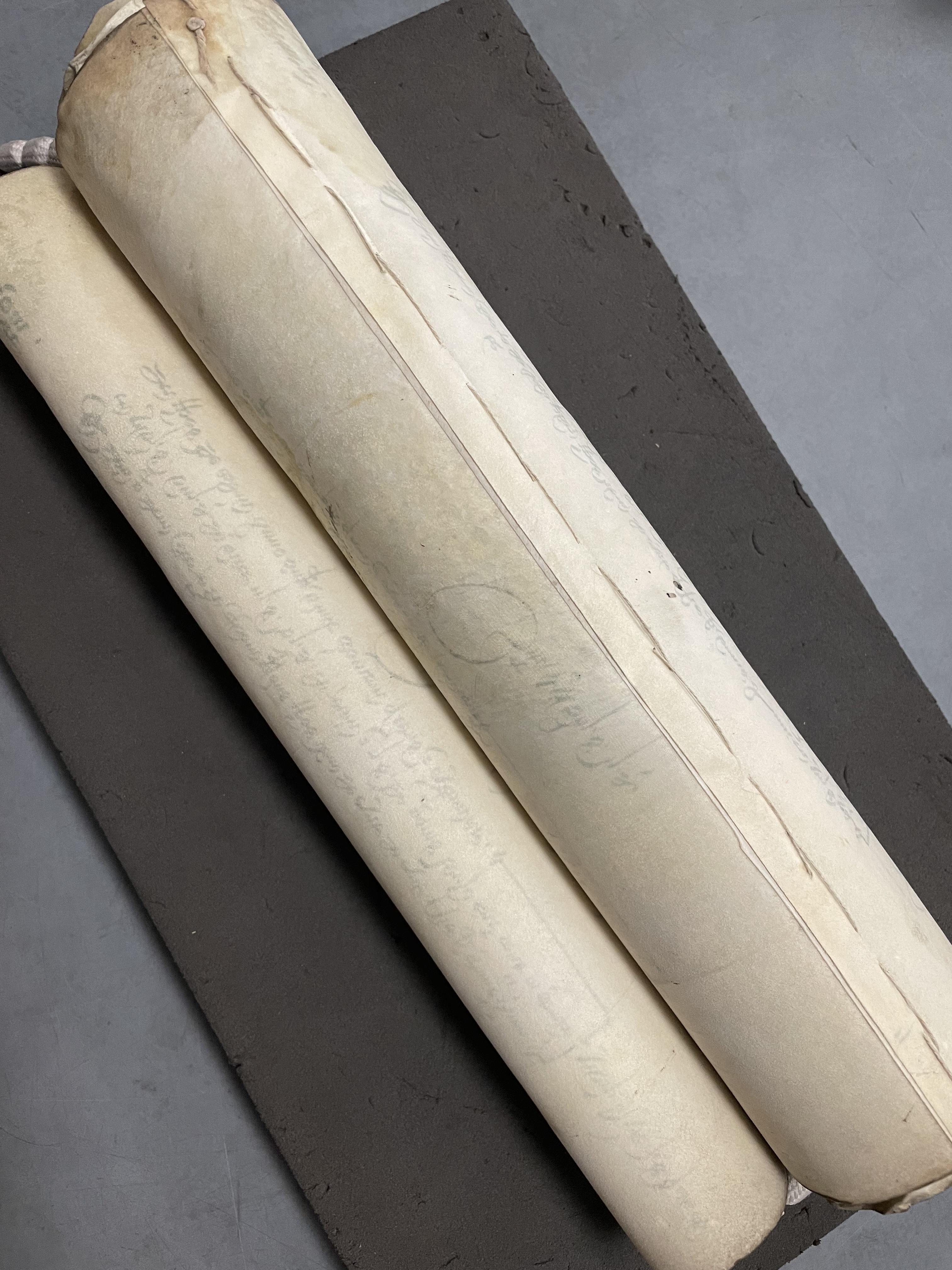
Many documents are stitched together at the top – or the end that eventually forms the core of the roll. And, having been rolled up for centuries, contents can be challenging to untangle. On numerous occasions, I haven’t dared unroll very far for fear of damage. Sometimes, I can’t find the end and struggle to unroll in such a way to avoid different membranes springing back.
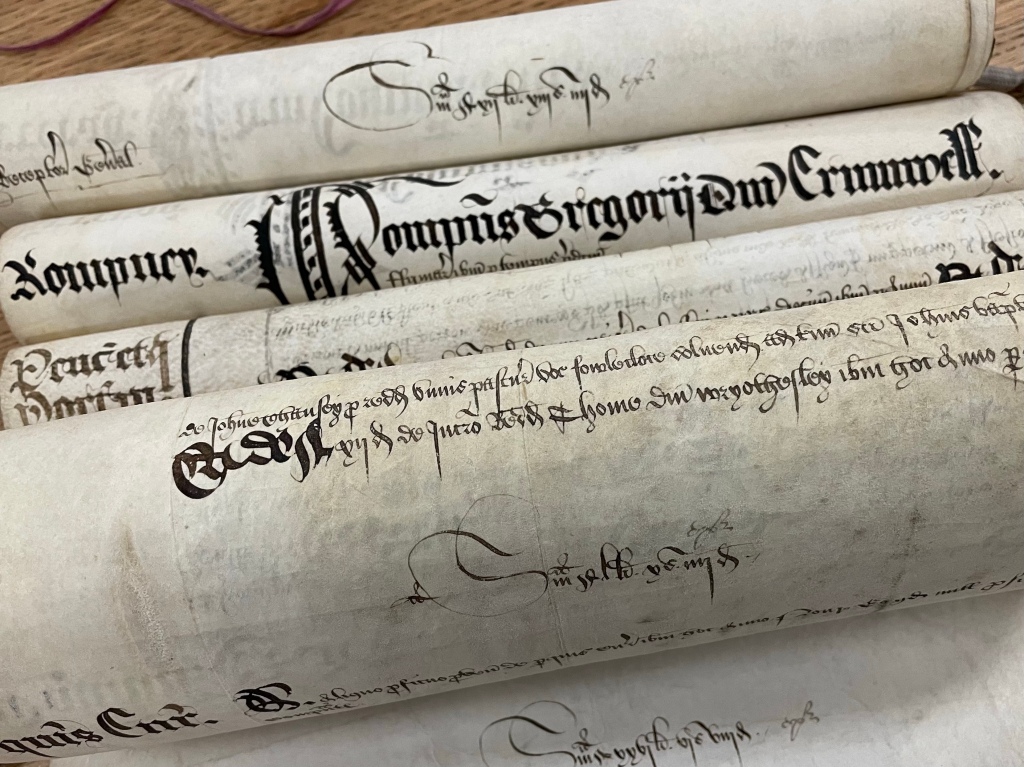
Four sheets of parchment, which have been rolled since the 16th century, sprung back into individual roles.The words “Gregory Cromwell” are visible on the second roll down.
Where is the end of this document that refers to Gregory Cromwell?

Despite the frustrations of working with these rolls, I love them. I love seeing the stitches, and I love the act of unrolling bit by bit, an inch at a time, and not being able to see the whole document at once. It reminds me of my rolled quilted interpretation of Wolf Hall, which cannot and should not be seen all at once.
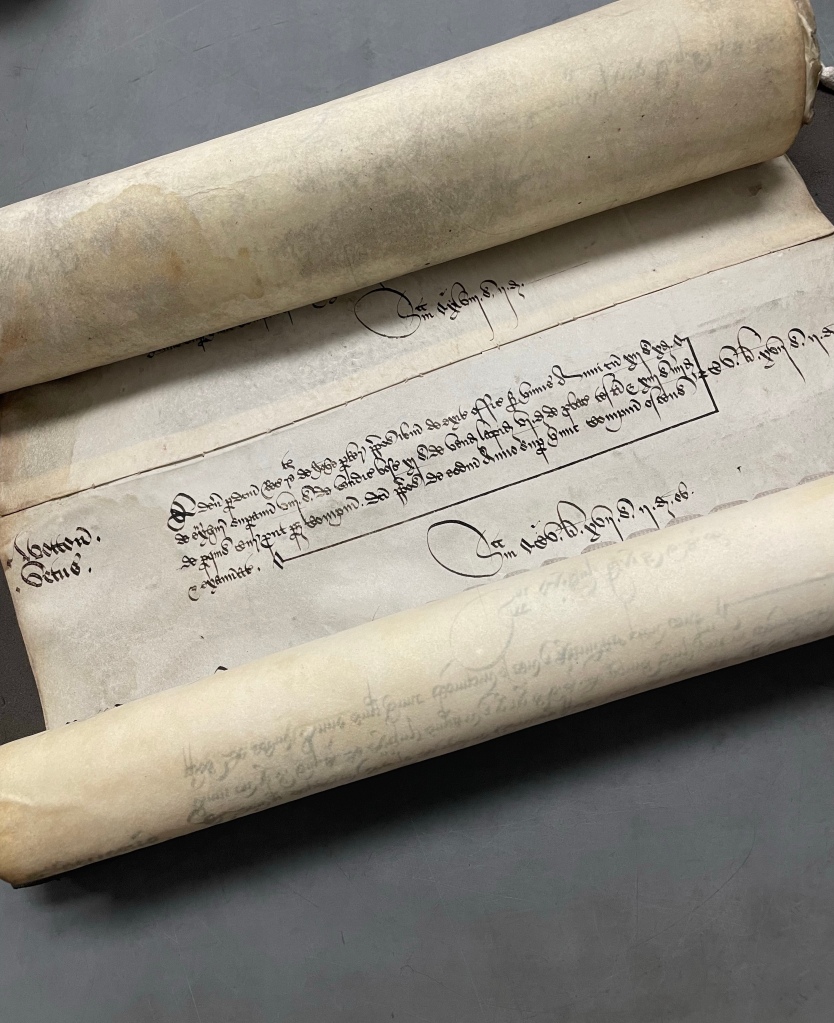
Some invaluable surviving documents are not rolled, but preserved flat, boxed carefully under lock and key. These are King’s Bench documents from 1536 – and they are from the trial of Queen Anne Boleyn and the men accused of treason alongside her.

Today, I saw documents listing the names of George Boleyn, William Brereton, Francis Weston, Henry Norris, and Mark Smeaton – the men accused with the queen. Their names are clearly readable in beautiful script – but there’s something very unsettling about carefully controlled handwriting when it documents death sentences. I have never had such a strong visceral reaction when looking at documents before. These papers carry a weight of pain, grief, fear, death, and betrayal. I felt shaken just brushing my hand against them, and against the remains of the leather bags in which the documents were once carried.
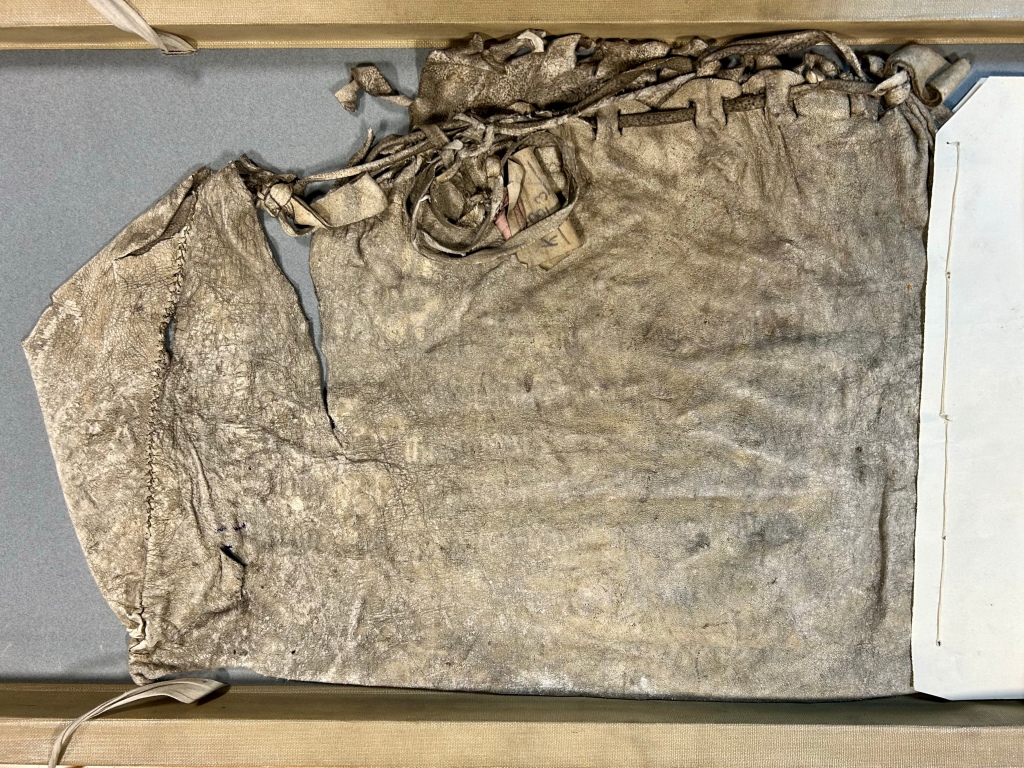
A pale brown gathered pouch made of leather, ripped and decaying.
What remains of the leather bag that held the trial documents that condemned Anne Boleyn

These papers remind me of the stage play of Bring up the Bodies. Gregory asks his father whether the executed men are guilty. And he clarifies, “I didn’t mean, ‘Did the court find them guilty?’ Father. I meant, ‘Did they do it?’” Thomas replies: “Who knows?”

The trial papers include documents that were extended by the careful use of herringbone stitch. As Hilary Mantel wrote in The Mirror and the Light, “it’s useful to have the evidence stitched together”. But even today, this stitched together evidence is controversial, contested, unreliable, shifting. The stitches don’t strengthen the evidence, but they strengthen its documentation.
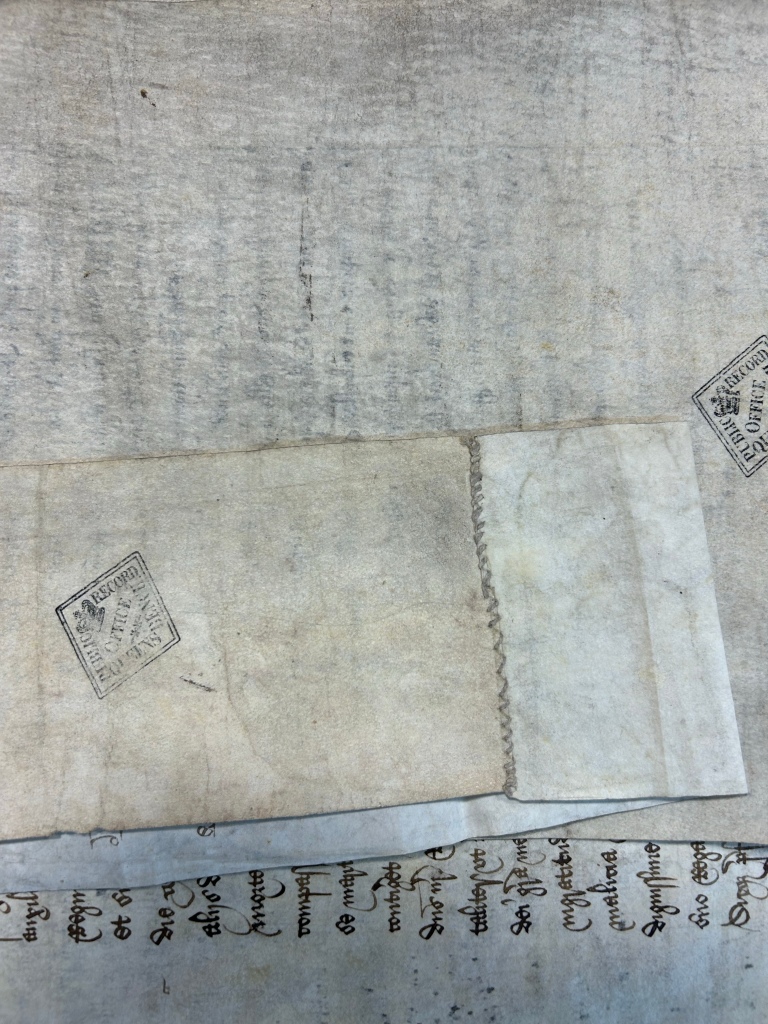
Parchments stitched together with herringbone stitch, pictured from the back
Herringbone stitch, stitching the evidence together

Master of the Rolls

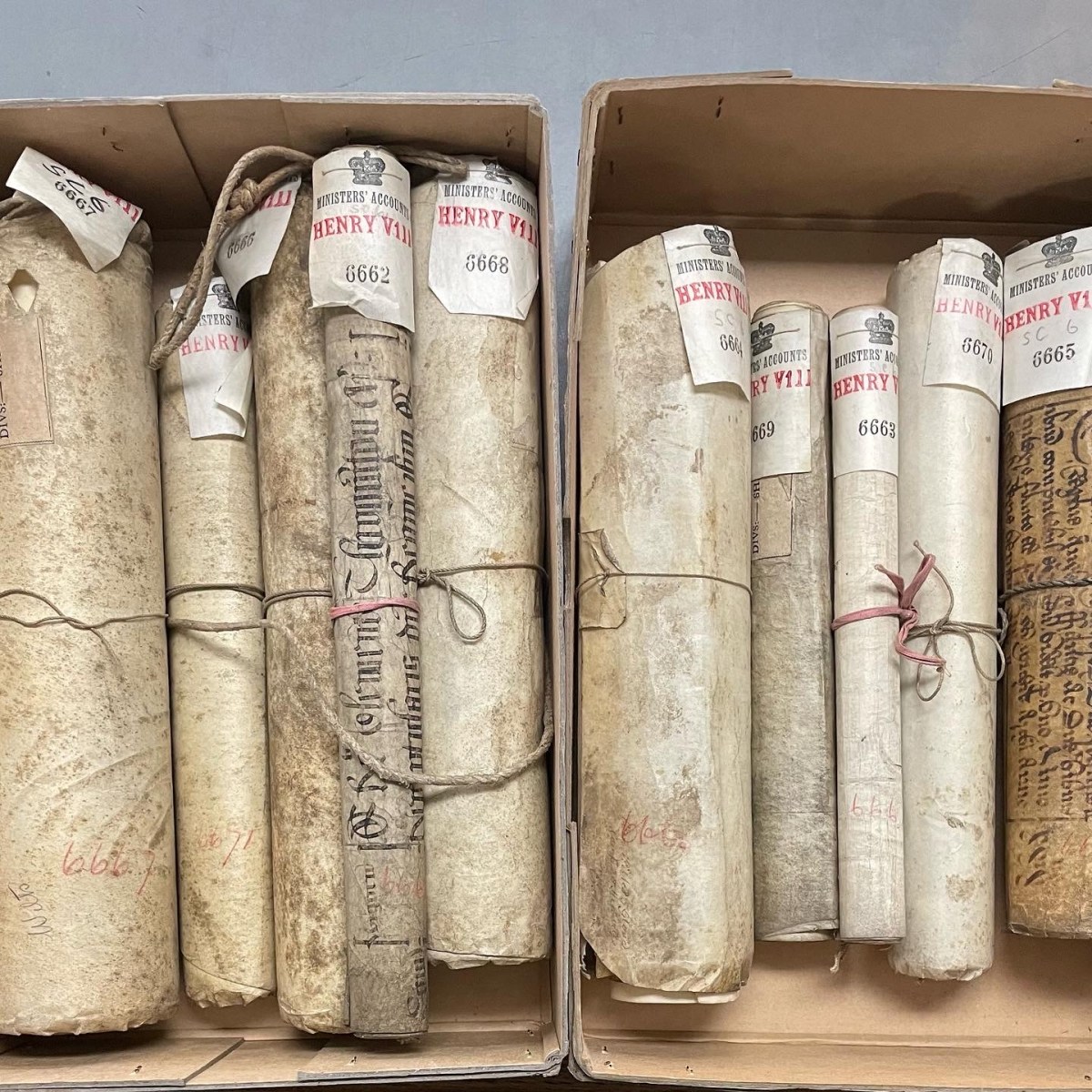
Two cardboard boxes containing rolls of parchment labelled Henry VIII
Three sets of rolled and embroidered fabric, on a wave designed background
Three Cromwell Thames Rolls

My Cromwell trilogy stitching project seems to have found a recurring shape: I keep rolling my stitchery.

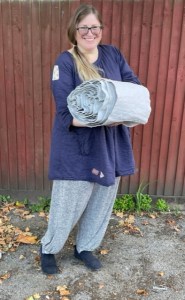
Rolling started as a practical solution to making the first Wolf Hall quilt: a very long (forty six feet) quilted piece. I had to store it somehow and the best solution was to roll it. Then when I had finished it, and was wondering what have I made? I came to the conclusion that rolling felt entirely natural because I felt strongly that the whole piece should not be visible at once.

A white woman stands in front of a fence, holding a rolled piece of quilting which is predominantly pale grey.
The Rolled Wolf Hall Quilt, August 2021

This is also a play on words. Thomas Cromwell became Master of the Rolls on 8 October 1534, a post he held until 10 July 1536. Hilary Mantel describes it as ‘an ancient judicial office, it commands one of the kingdom’s great secretariats’. (Wolf Hall, ‘The Map of Christendom’); and in this lucrative role Cromwell had access to official records; inked on rolls of parchment.

A black and white illustration of Sir Thomas Cromwell, Knight. Cromwell is seated behind a table, holding a roll of parchment in his hand.
Thomas Cromwell Earl of Essex by Unknown artist, by Wenceslaus Hollar etching,
mid 17th century NPG D9736 © National Portrait Gallery, London.
This work is licenced under https://creativecommons.org/licenses/by-nc-nd/3.0/ *

A couple of weeks ago I went to the National Archives at Kew in order to look at some sixteenth century documents. I ordered up various papers including Cromwell’s ‘remembrances’ or to do lists, some dating from his years with Cardinal Wolsey and some dating from the 1530s when he was high in the King’s favour. These documents were all flat and had been pasted into a book by some 19th century organising hand; but I then had the thrill of opening boxes of rolls.

Two cardboard boxes containing rolls of parchment labelled Henry VIII
Boxes of Henry VIII’s rolls

I was looking for a specific item that I hoped was listed in an inventory roll; I didn’t find it.

I had – optimistically – neglected to take into account two basic facts: firstly, I don’t read Latin, and secondly, Secretary Hand is a challenge to my 21st Century eye. I also hadn’t appreciated how difficult rolls can be to handle. Some are single sheets and can be unrolled very easily, but others are made up of multiple sheets stitched together.

The inventory to which I was particularly drawn defeated me: not only were single sheets stitched together to create one long piece, but in places multiple sheets had been stitched on top of each other. I simply could not work out where the different elements ended or find a way to unroll it without fear of damaging it. So I didn’t gain a full impression of the content – but I did find treasure nonetheless.

An old roll of parchment
I couldn’t find the end of this roll…

I spotted a magnificent “S” – and then another in a different style. Then another… and I started to suspect that the clerk who had the task of writing this document – a very long inventory of property and land – had been bored, and to alleviate that boredom, had started to play a game with his lettering.

Four elaborate S shapes written in ink on parchment
S is for…..

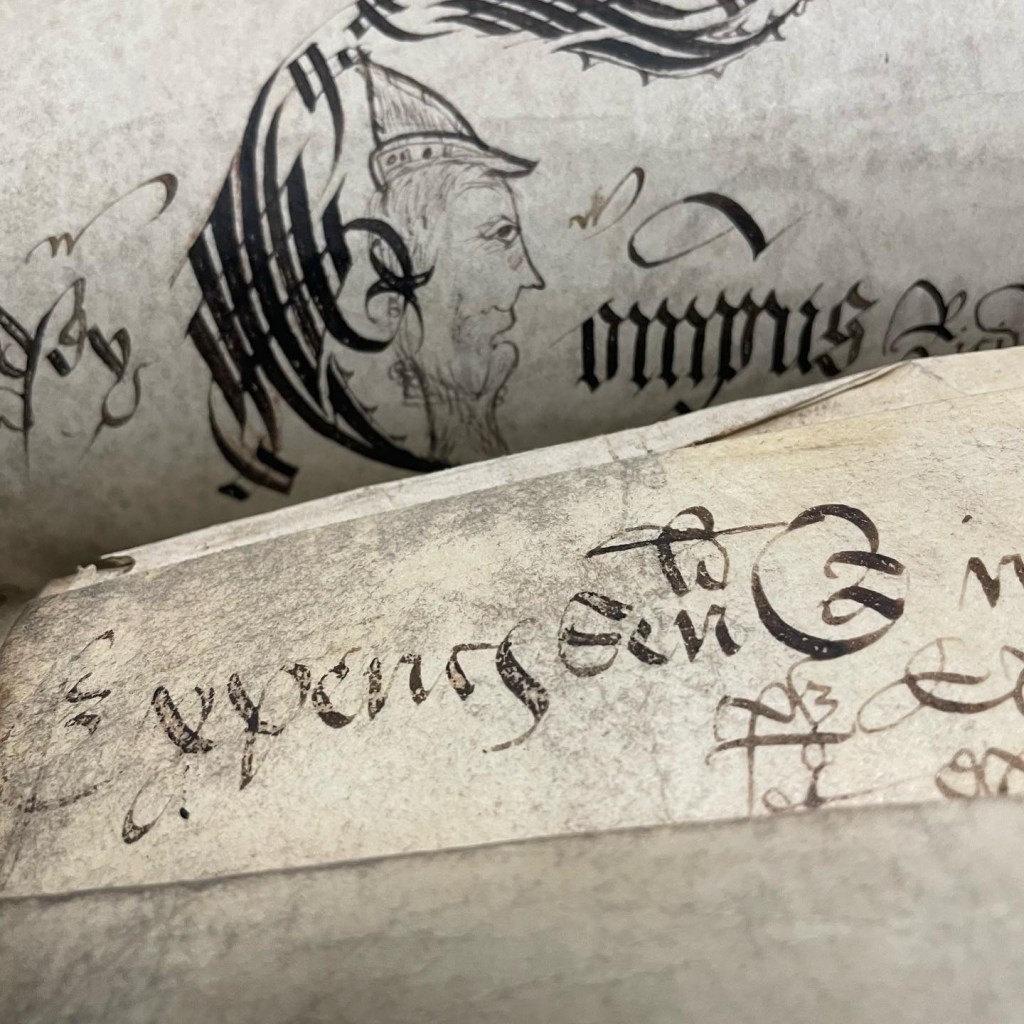
And as I looked for more of these elaborate “S” shapes I had a splendid surprise! A 500-year old face popped out to say hello. The bored clerk had left a gift – but I suspect they did not know that they would make someone laugh centuries later. I salute you, unknown clerk. I hope you and your sense of mischief did well in the 1540s.

A bearded face doodled on a roll of parchment
Boo!

* Portrait of Thomas Cromwell provided under Creative Commons license as at https://creativecommons.org/licenses/by-nc-nd/3.0/legalcode